
 Apr 13, 2026
 5 min read
GEP Round 2 Seminar Recap: Review Key Exam Points and Study Plans with Tr. Boqian
On Friday, September 5, Teacher Boqian from Kangaroo Study held a 2025 GEP Round 2 Preparation Seminar.
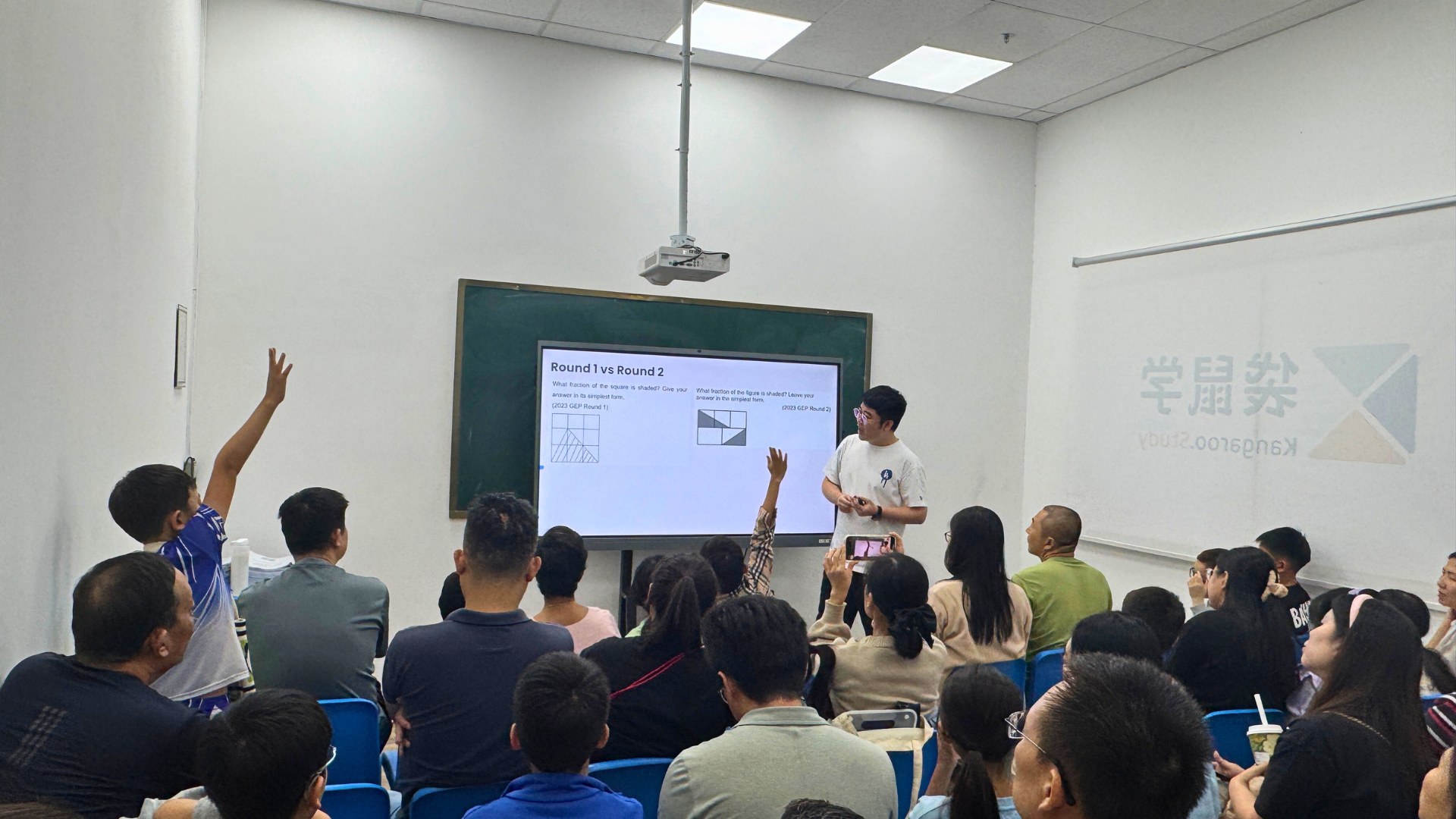
 The lecture was so popular that the classroom was packed to full capacity. This seminar focused on the characteristics of the GEP Round 2 exam, preparation methods, and study plans to help students better understand and prepare for the test.
Seminar Highlights
The lecture was so popular that the classroom was packed to full capacity. This seminar focused on the characteristics of the GEP Round 2 exam, preparation methods, and study plans to help students better understand and prepare for the test.
Seminar Highlights
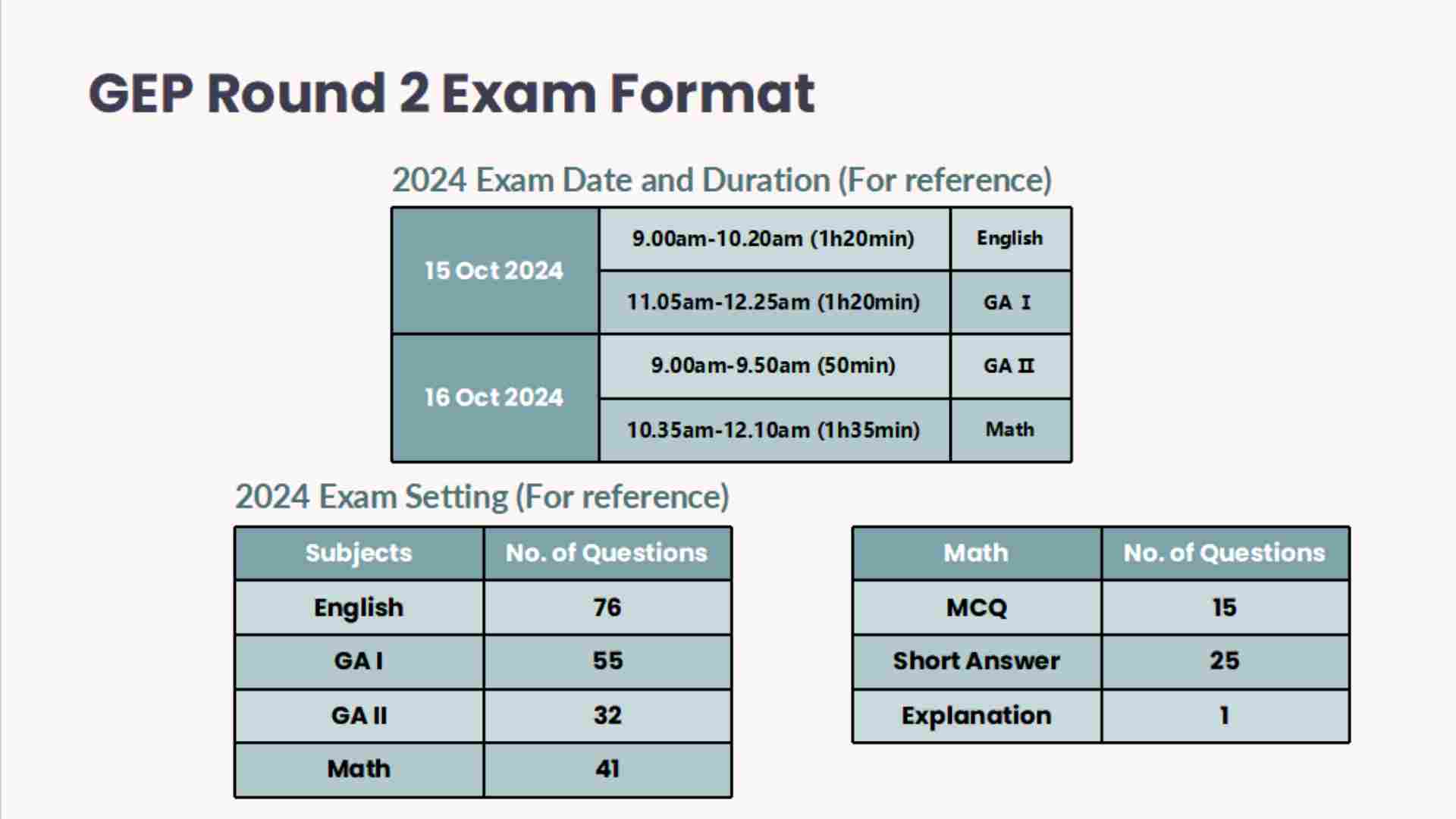
 Teacher Boqian first went through key dates for GEP Round 2:
 As for exam content, Teacher Boqian analysed the characteristics of Round 1 and Round 2 questions:
 This comparison is designed to help parents and students clearly identify challenges in Round 2.
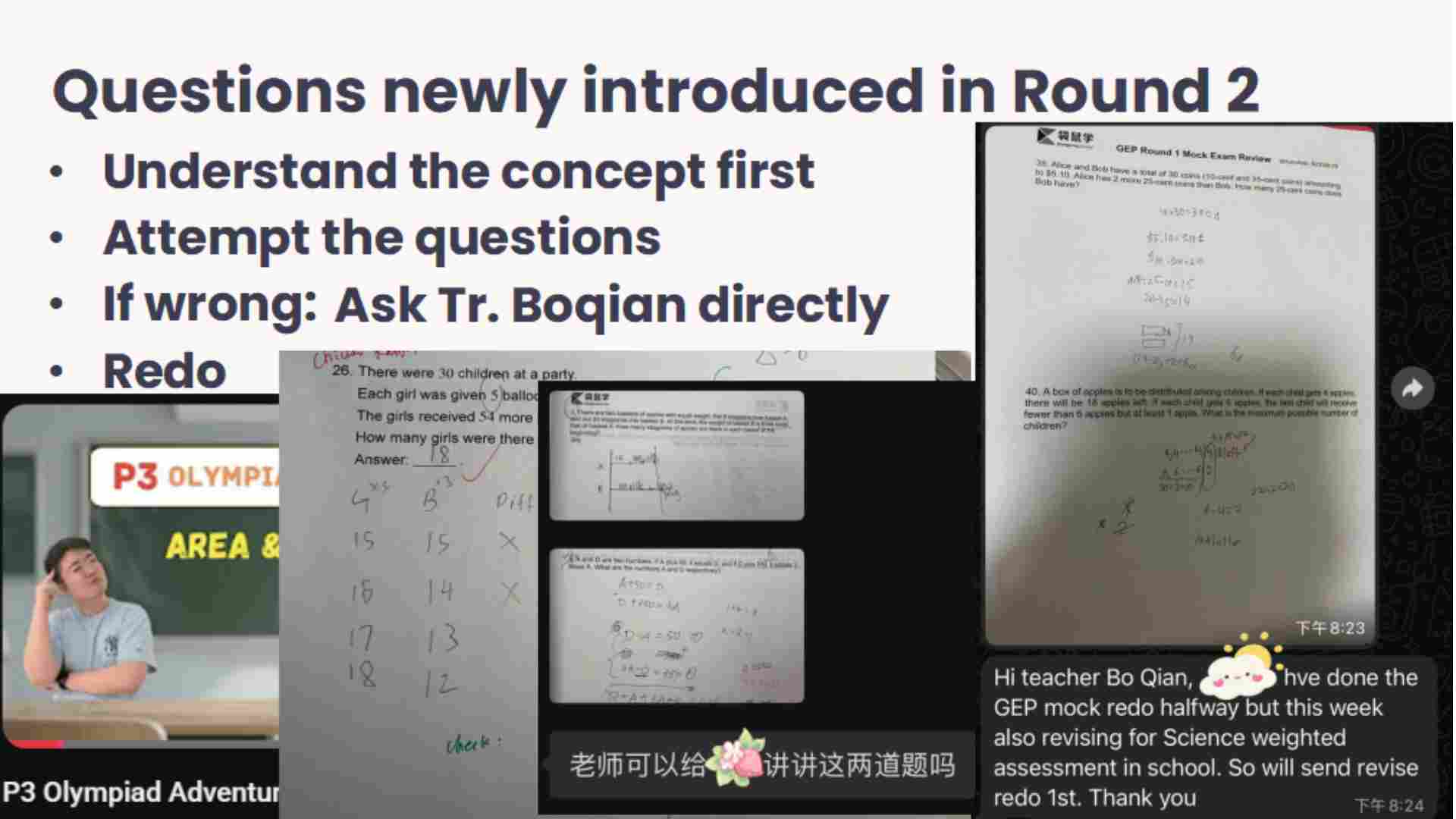 For new Round 2 question types, he emphasised the importance of understanding the concept first before answering. If stuck, students should ask the teacher immediately, then redo the question. This method ensures knowledge gaps are filled, and challenges are turned into learning opportunities.
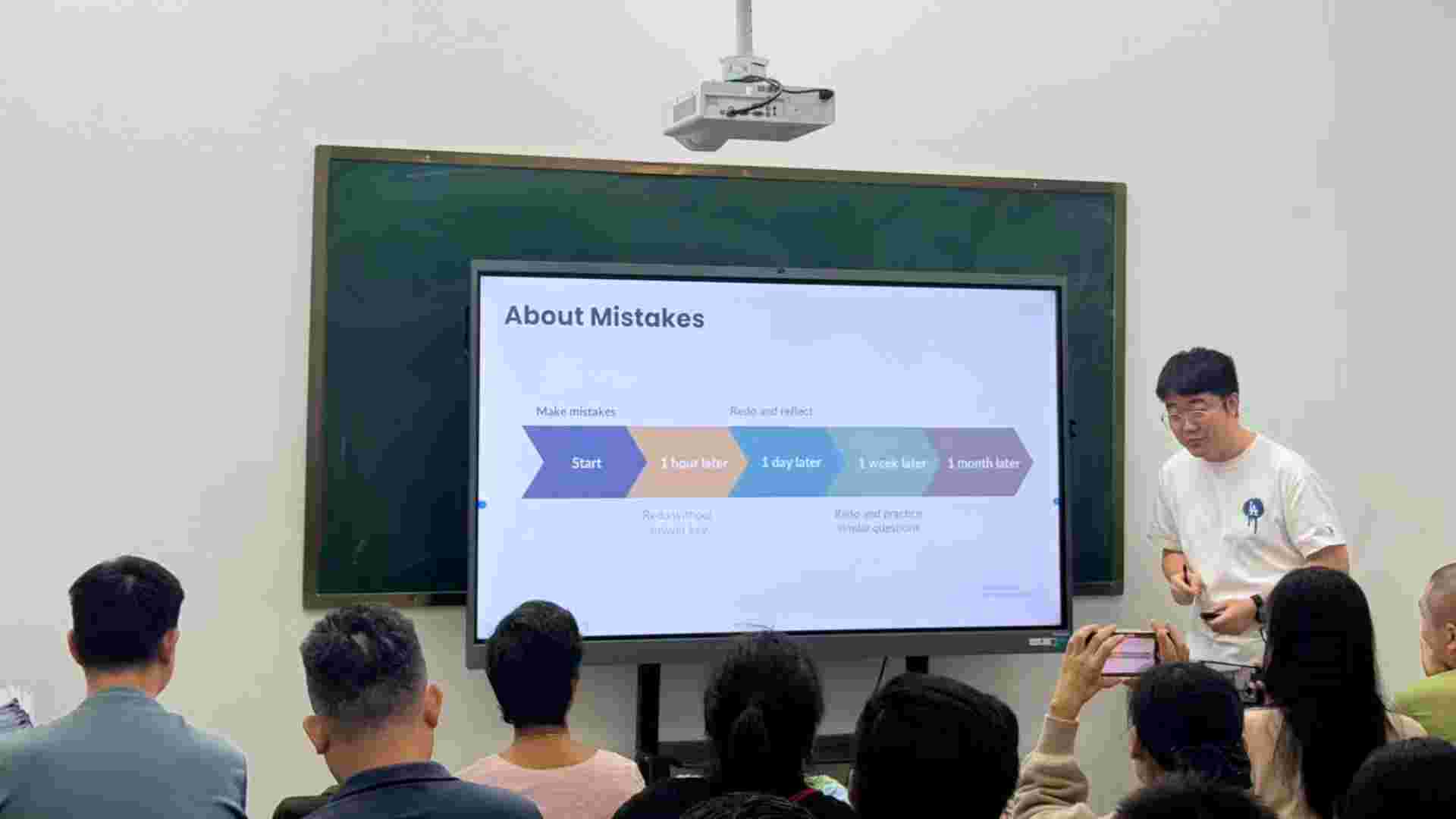 To strengthen preparation, Teacher Boqian shared a systematic review cycle:
Mistake Identified: Attempt the question and find the error
Retry 1 hour later: Practice again without looking at the answer
Retry and reflect 1 day later: Summarise common mistakes
Retry similar question types 1 week later: Reinforce understanding
Comprehensive review 1 month later: Consolidate knowledge into revision notes
This step-by-step approach helps students move from problem identification → active correction → reinforcement → consolidation, ultimately building long-term memory and stronger thinking skills.
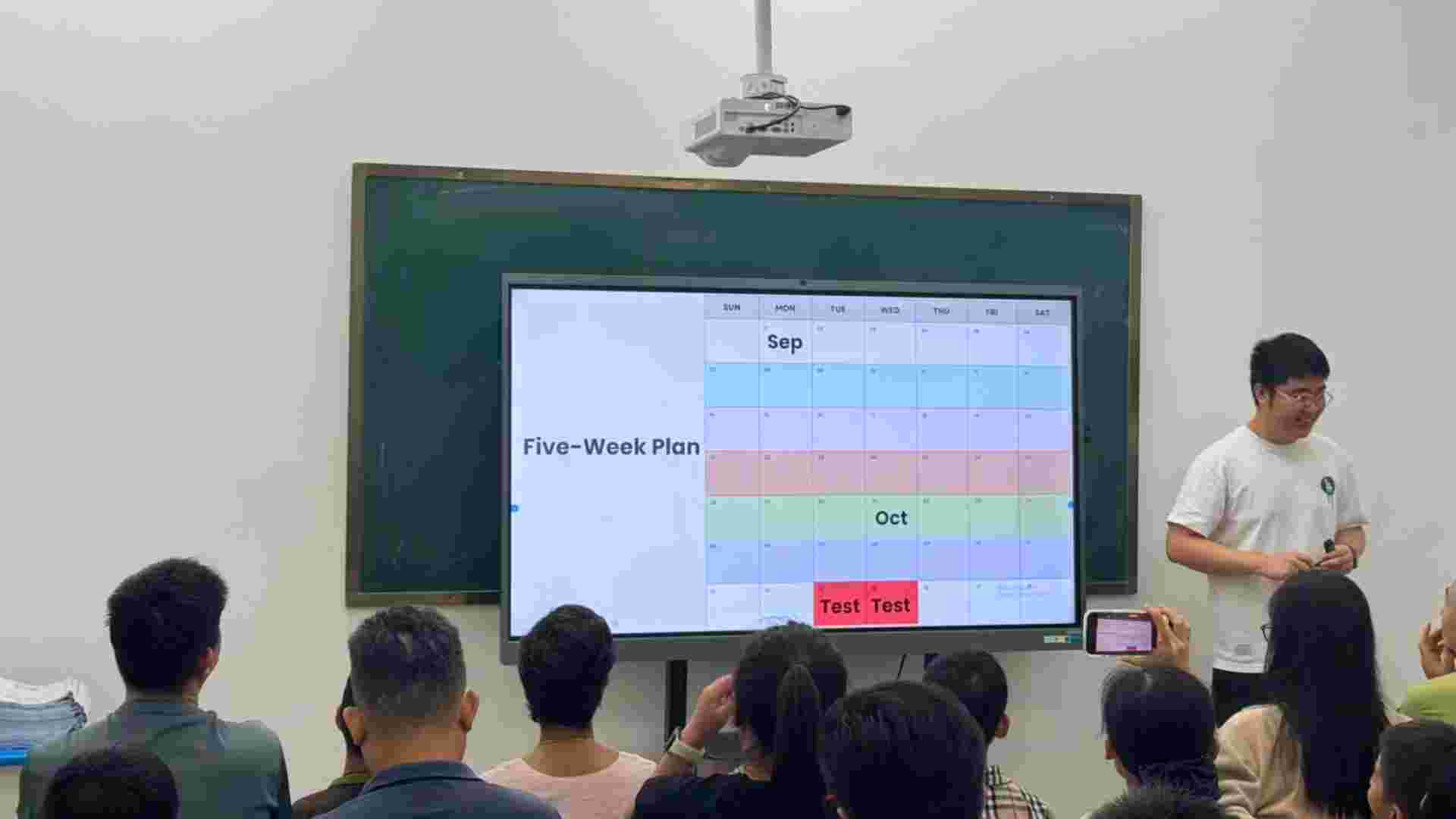 Teacher Boqian then outlined a 5-week study plan for tackling GEP Round 2:
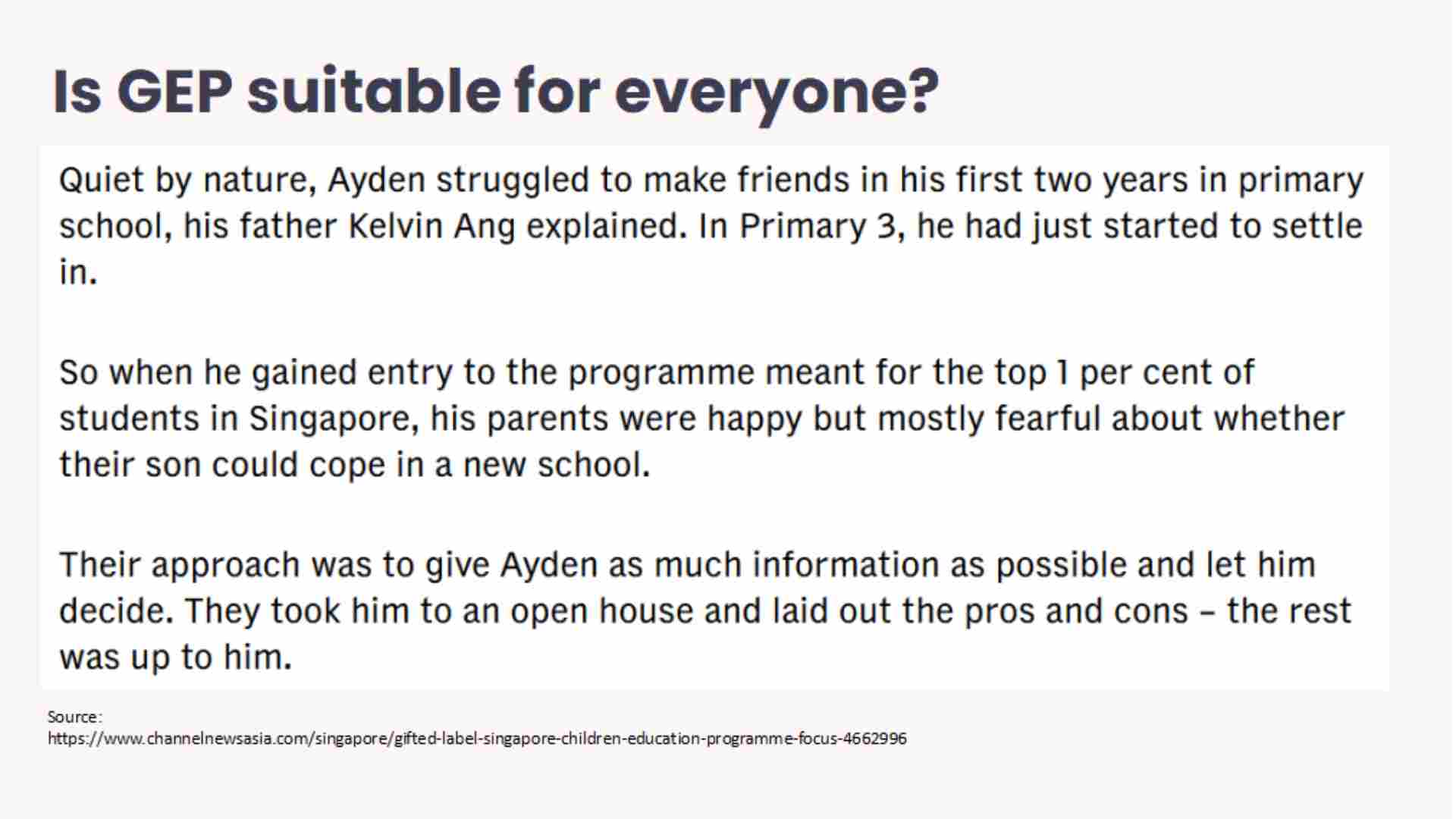 He also reminded parents not to view GEP with an overly results-driven mindset, mentioning that GEP is a developmental program and not the final destination. Once students enter secondary schools, most return to the mainstream curriculum. A child's growth and learning journey are not solely dependent on the GEP.
Therefore, regardless of whether a child eventually enters GEP, parents should not be overly anxious about it. Even if admitted, enrollment is not mandatory—the decision should depend on the child's personality, interests, and family considerations.
He also reminded parents not to view GEP with an overly results-driven mindset, mentioning that GEP is a developmental program and not the final destination. Once students enter secondary schools, most return to the mainstream curriculum. A child's growth and learning journey are not solely dependent on the GEP.
Therefore, regardless of whether a child eventually enters GEP, parents should not be overly anxious about it. Even if admitted, enrollment is not mandatory—the decision should depend on the child's personality, interests, and family considerations.
 At the end of the seminar, all parents received the "Mastering GEP Round 2" practice book meticulously prepared by Teacher Boqian. This book contains actual exam papers from the past 4 years, along with 3 years of mock papers, which are extremely valuable resources for exam preparation.
Through this seminar, parents and students not only gained clarity on Round 2 timelines, question type differences, and preparation strategies, but also walked away with a practical learning plan. Now, let's put these methods into practice and support students toward the coming challenge!
About the Teacher
At the end of the seminar, all parents received the "Mastering GEP Round 2" practice book meticulously prepared by Teacher Boqian. This book contains actual exam papers from the past 4 years, along with 3 years of mock papers, which are extremely valuable resources for exam preparation.
Through this seminar, parents and students not only gained clarity on Round 2 timelines, question type differences, and preparation strategies, but also walked away with a practical learning plan. Now, let's put these methods into practice and support students toward the coming challenge!
About the Teacher
 Originally from Jilin, China, Teacher BoQian achieved 1st place with the highest score in his high school entrance examination at age 16, earning a full scholarship to Raffles Institution, Singapore’s premier junior college. He later graduated from the National University of Singapore (NUS). Having lived in Singapore for 15 years, he has a deep understanding of the local education system, academic pathways, and student needs.
Teacher Bo Qian has garnered accolades in numerous national and international competitions,including:
Originally from Jilin, China, Teacher BoQian achieved 1st place with the highest score in his high school entrance examination at age 16, earning a full scholarship to Raffles Institution, Singapore’s premier junior college. He later graduated from the National University of Singapore (NUS). Having lived in Singapore for 15 years, he has a deep understanding of the local education system, academic pathways, and student needs.
Teacher Bo Qian has garnered accolades in numerous national and international competitions,including:
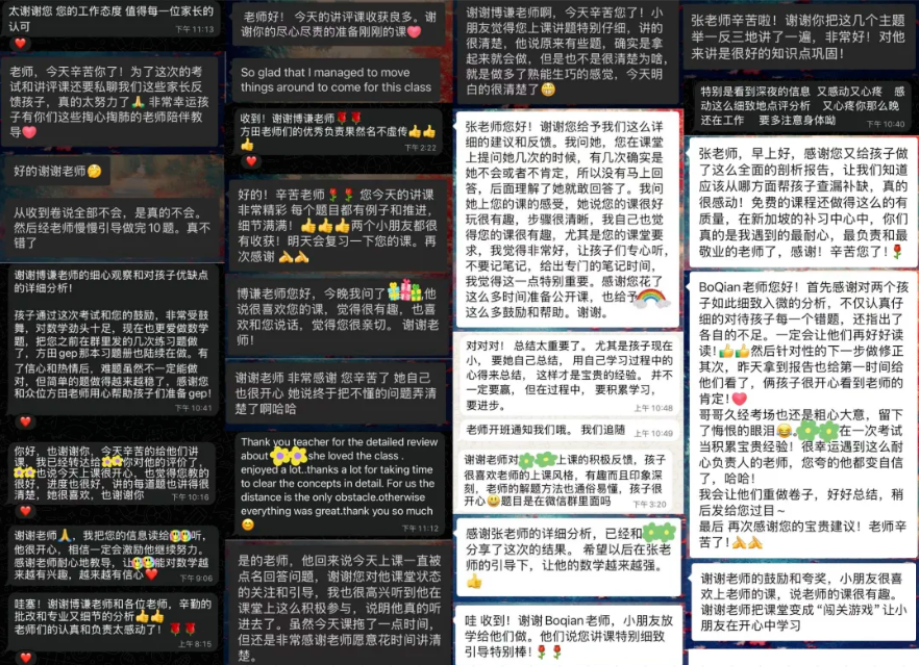 After the GEP Round 2 seminar, parents praised his teaching style as clear, engaging, and well-liked by the students. Many also highlighted the seminar's practical value.
If you are interested in better understanding Tr. Boqian's teaching style, check out a lesson he recorded on YouTube:
Click to watch Tr. Boqian's YouTube video
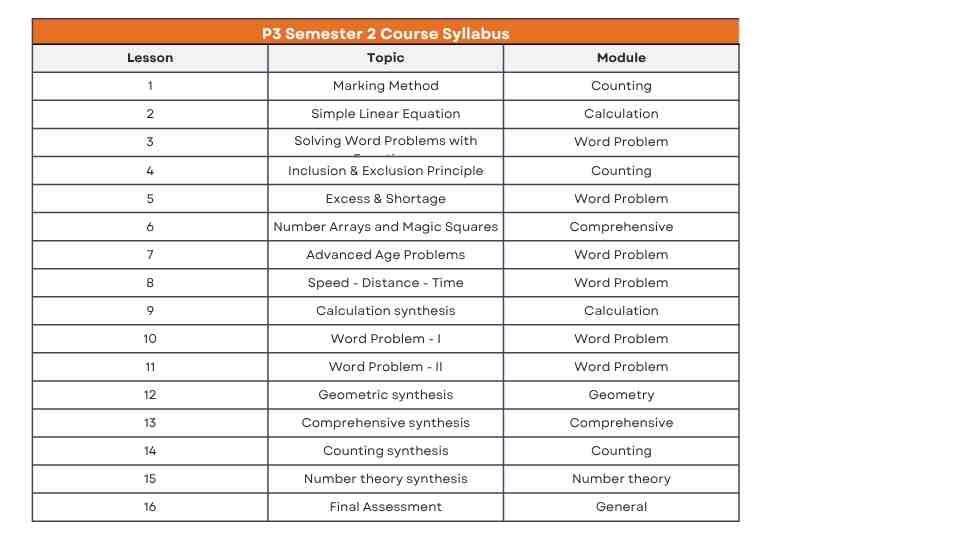
P3 Semester 2 Course Outline
After the GEP Round 2 seminar, parents praised his teaching style as clear, engaging, and well-liked by the students. Many also highlighted the seminar's practical value.
If you are interested in better understanding Tr. Boqian's teaching style, check out a lesson he recorded on YouTube:
Click to watch Tr. Boqian's YouTube video
P3 Semester 2 Course Outline
 Course Registration Information
Before course registration, students are required to take an entrance test for our teachers to evaluate students' current level and the most suitable class.
The registration process is as follows:
Course Registration Information
Before course registration, students are required to take an entrance test for our teachers to evaluate students' current level and the most suitable class.
The registration process is as follows:
Schedule the Entrance Test
Receive evaluation results and class recommendation
Complete payment and confirm chosen time slot
To schedule the entrance test, please contact Tr. Zhang Tao via WhatsApp / WeChat:
 Scan below to join our P3 study group for updates on upcoming free open classes and event information!
- Screening Test: August 21 (Thursday)
- Shortlisting Notification: Early October
- Selection Test: October 14 (Tuesday) & October 15 (Wednesday)
- Receive Result Notification: Early November
- School Posting Results: End November
As for exam content, Teacher Boqian analysed the characteristics of Round 1 and Round 2 questions:
- Round 1 and Round 2 features similar topics, but Round 2 questions are more difficult
- Round 2 introduces new topics, with a wider scope
- New question types that require explanations and reasonings are found in Round 2
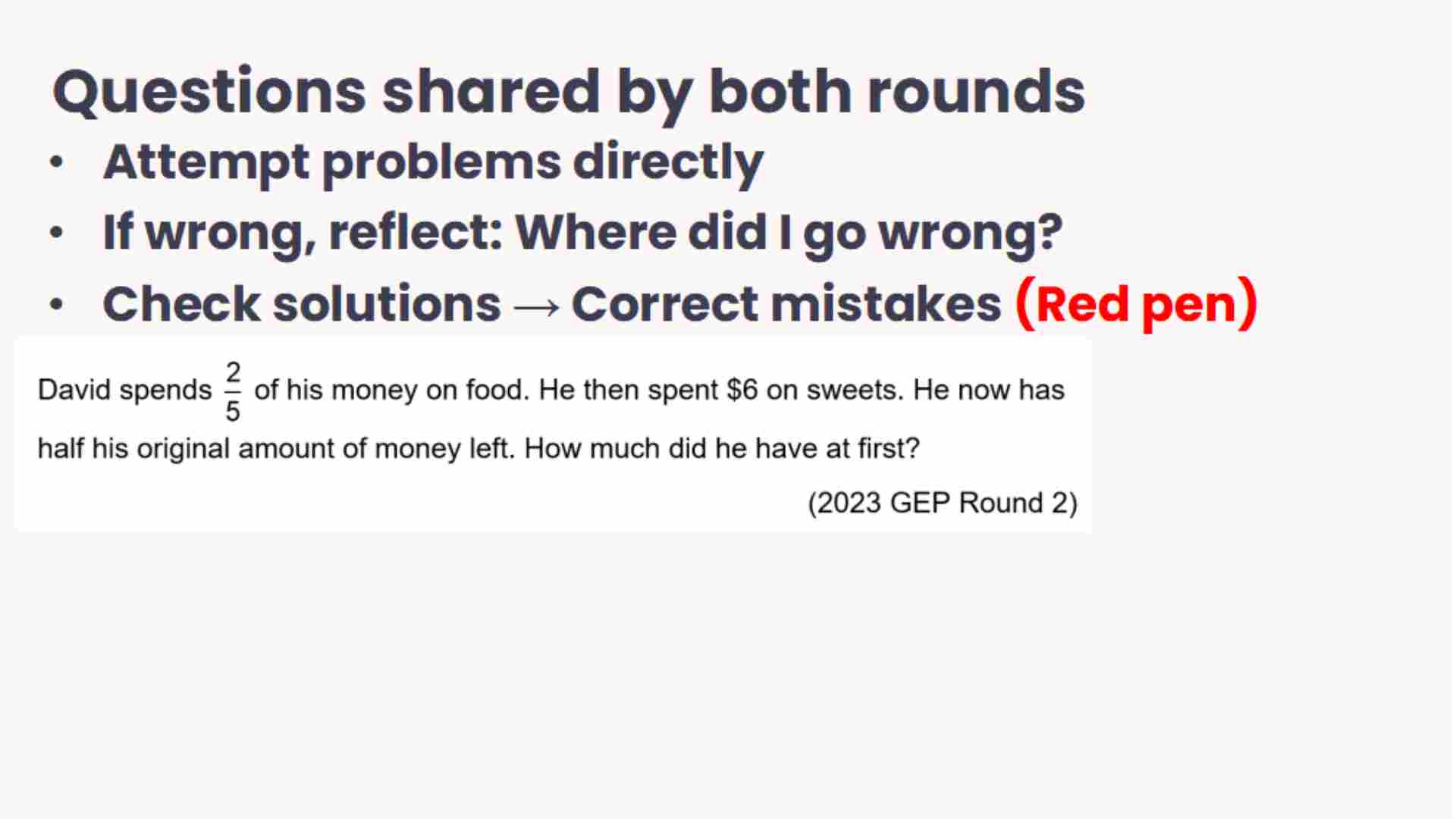
For questions that appear in both Round 1 and Round 2, the teacher points out that many students tend to underestimate their mistakes. They think, “I’ve already learned this concept,” skim through the solution, and assume they’ve understood it. But in reality, even a slight change in the problem often leaves them unable to solve it correctly.
During the seminar, the students were highly engaged, not only eagerly raising their hands to speak, but also actively sharing their thoughts and asking questions, which made the atmosphere much more lively and interactive.
The teacher’s advice is to carefully identify the differences between these questions and the Round 1 ones, and then summarize the methods needed. This approach is called the DM (Difference and Method) analysis method.
Teacher Boqian then outlined a 5-week study plan for tackling GEP Round 2:
- Week 1: Practice common Round 1 & 2 question types, strengthen answering techniques
- Week 2: Focus on new Round 2 question types, master new concepts
- Week 3: Sit for mock exams and review mistakes in detail
- Week 4: Do timed drills, sharpen speed and accuracy, revise weak spots
- Week 5: Full review, focus on weaknesses, and make the final push
He also reminded parents not to view GEP with an overly results-driven mindset, mentioning that GEP is a developmental program and not the final destination. Once students enter secondary schools, most return to the mainstream curriculum. A child's growth and learning journey are not solely dependent on the GEP.
Therefore, regardless of whether a child eventually enters GEP, parents should not be overly anxious about it. Even if admitted, enrollment is not mandatory—the decision should depend on the child's personality, interests, and family considerations.
Originally from Jilin, China, Teacher BoQian achieved 1st place with the highest score in his high school entrance examination at age 16, earning a full scholarship to Raffles Institution, Singapore’s premier junior college. He later graduated from the National University of Singapore (NUS). Having lived in Singapore for 15 years, he has a deep understanding of the local education system, academic pathways, and student needs.
Teacher Bo Qian has garnered accolades in numerous national and international competitions,including:
- Gold Medal – Hua Luogeng Gold Cup Mathematics Competition
- Perfect Score – American Mathematics Competition (AMC 8)
- Top 1% – AMC 10/12, qualifying for the AIME
After the GEP Round 2 seminar, parents praised his teaching style as clear, engaging, and well-liked by the students. Many also highlighted the seminar's practical value.
If you are interested in better understanding Tr. Boqian's teaching style, check out a lesson he recorded on YouTube:
Click to watch Tr. Boqian's YouTube video
P3 Semester 2 Course Outline
Course Registration Information
Before course registration, students are required to take an entrance test for our teachers to evaluate students' current level and the most suitable class.
The registration process is as follows:
Scan below to join our P3 study group for updates on upcoming free open classes and event information!
Discussion
0 Comments
Join the conversation
Share your thoughts or ask a question about this article.
0 / 200
'%3e%3cpath%20d='M7.99992%2014.6673C11.6818%2014.6673%2014.6666%2011.6825%2014.6666%208.00065C14.6666%204.31875%2011.6818%201.33398%207.99992%201.33398C4.31802%201.33398%201.33325%204.31875%201.33325%208.00065C1.33325%2011.6825%204.31802%2014.6673%207.99992%2014.6673Z'%20stroke='%2390A1B9'%20stroke-width='1.33333'%20stroke-linecap='round'%20stroke-linejoin='round'/%3e%3cpath%20d='M5.33325%209.33398C5.33325%209.33398%206.33325%2010.6673%207.99992%2010.6673C9.66659%2010.6673%2010.6666%209.33398%2010.6666%209.33398'%20stroke='%2390A1B9'%20stroke-width='1.33333'%20stroke-linecap='round'%20stroke-linejoin='round'/%3e%3cpath%20d='M6%206H6.00667'%20stroke='%2390A1B9'%20stroke-width='1.33333'%20stroke-linecap='round'%20stroke-linejoin='round'/%3e%3cpath%20d='M10%206H10.0067'%20stroke='%2390A1B9'%20stroke-width='1.33333'%20stroke-linecap='round'%20stroke-linejoin='round'/%3e%3c/g%3e%3cdefs%3e%3cclipPath%20id='clip0_2876_5854'%3e%3crect%20width='16'%20height='16'%20fill='white'/%3e%3c/clipPath%3e%3c/defs%3e%3c/svg%3e)