
 Apr 13, 2026
 5 min read
P1-P2 | End of Year Holiday & Semester 1 Curriculum
In the lower primary years (K2–P3), many children — and parents — often feel the most uncertain.
After P1, most students have already adapted to school life, but the next questions soon arise:
GEP, Math Olympiad, DSA — what should my child learn, and how should we plan ahead?As math becomes more structured and challenging, how can we spark and sustain a child’s interest and motivation?When issues like careless mistakes, weak calculation, or lack of self-discipline appear, how can we build the right learning habits?
From our teachers’ perspective, these three questions are deeply connected.Only by developing a child’s knowledge, interest, and habits together can we truly nurture lifelong mathematical ability.Why Parents Choose Kangaroo Study?
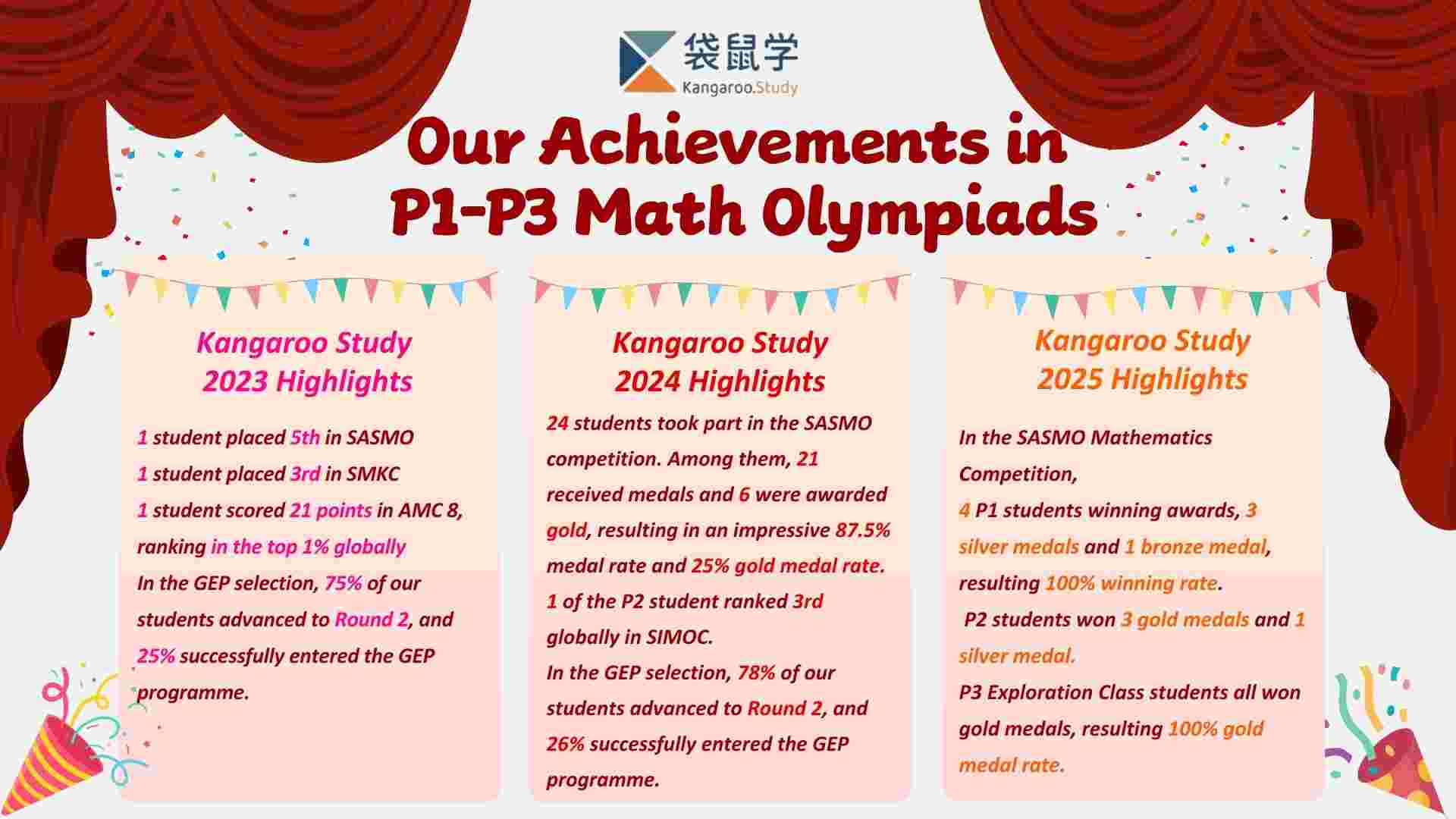
Since Kangaroo Study established its presence in Singapore, our lower primary students have consistently achieved outstanding results across various mathematics competitions for three consecutive years.
In this year’s SASMO competition, all four participating P1 students received awards, including three silver medals and one bronze medal, achieving a 100% award rate. P2 students secured three gold medals and one silver medal, while the P3 Exploration class achieved a remarkable clean sweep of gold medals, with a 100% gold rate.
What Will Students Learn?
“School math is too slow, too little, and too easy.”
At the same time, every year we hear parents say:
“Before the GEP test, we realized so many question types were completely unfamiliar.”
“My child was recommended for NMOS in P5, but couldn’t solve most of the problems.”
The core issue is this: many families treat learning math enrichment as exam preparation, rather than as a long-term process of developing mathematical thinking.
In fact, Math Olympiad is a complete and systematic framework—covering seven major modules: Arithmetic, Counting, Number Theory, Word Problems, Speed–Distance Problems, Geometry, and Mixed Topics.
Children should begin at a level they can fully understand, then progress step by step, revisiting and deepening concepts in a spiral progression. Ideally, this foundation can start from the end of K2, allowing children to grow steadily within a structured system and gain confidence through competitions as their understanding deepens.
In response to the latest GEP curriculum reforms, Kangaroo Study has developed a “Six-Module Framework with 40 Core Concepts,” covering Arithmetic, Logic, Word Problems, Geometry, Counting, and Number Theory.
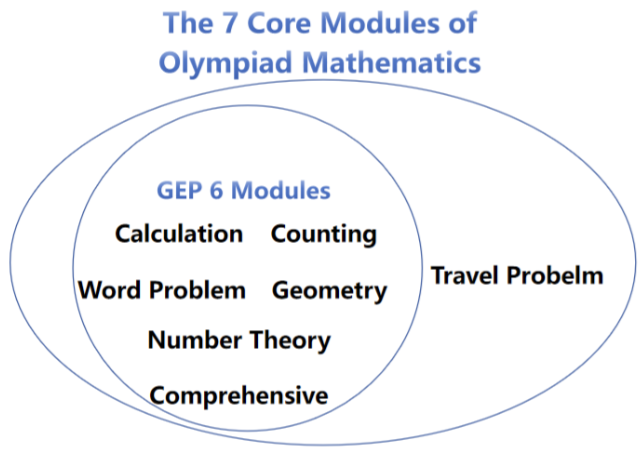
These core ideas are carefully woven into the P1–P3 curriculum, helping children systematically build a solid and comprehensive foundation in mathematical thinking.
2. Interest Enlightenment — Guiding Children Toward a Sense of Achievement
Many parents often say:
“My child isn’t self-motivated — I have to keep pushing.”
“My child is afraid of difficult problems and lacks confidence.”
At the core of these issues lies one key factor — a lack of genuine interest. At Kangaroo Study, we believe true interest doesn’t come from external rewards, but from the sense of accomplishment that grows through learning. Our teachers use a guided learning approach, helping children learn how to think, not just what to do.
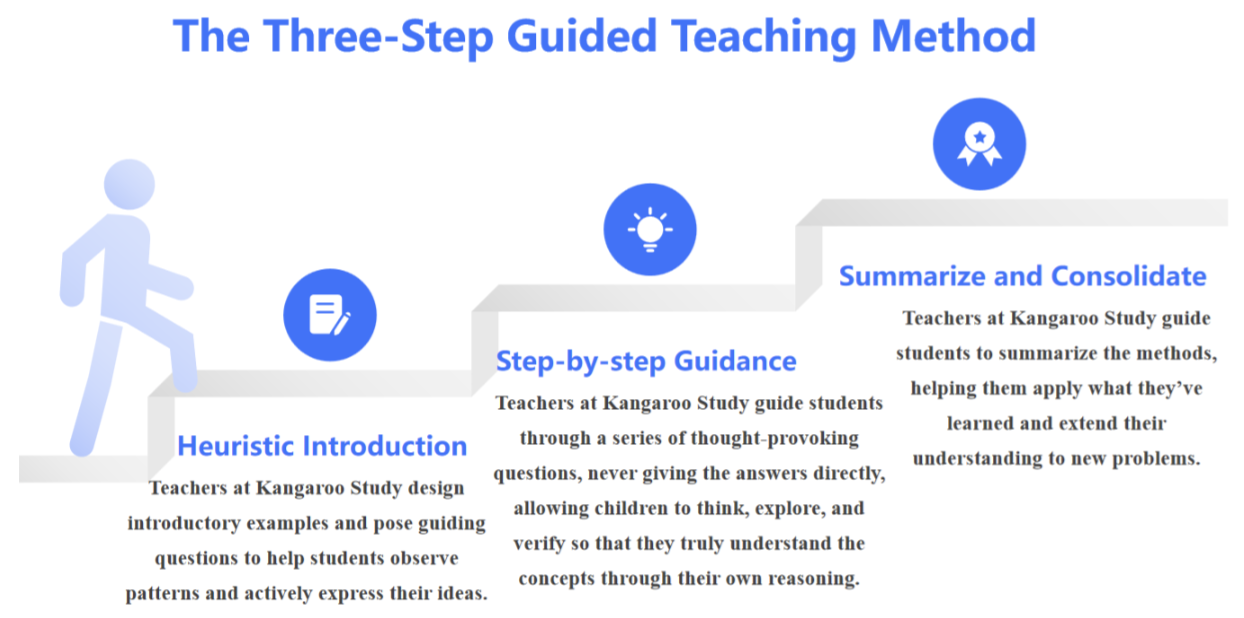
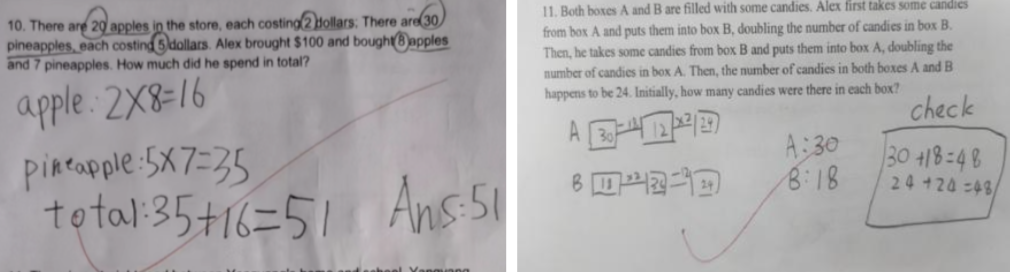
Instead of criticizing mistakes, we encourage effort, guide reflection, and help students find their own paths to the solution. When children experience those “I figured it out!” or “I found the pattern!” moments, learning becomes exciting, and confidence shines through. They begin to enjoy thinking and exploring, facing challenges with curiosity rather than fear.

This kind of learning not only builds ability, but transforms mathematics into a journey of discovery and joy.
3. Habit Enlightenment — From Being Pushed to Self-Driven
Many children lose focus in class, make careless mistakes, or skip review altogether. The real cause isn’t ability — it’s the lack of strong learning habits. At Kangaroo Study, our teachers are not just knowledge instructors — they are also habit coaches. Through consistent guidance and feedback, good habits are built naturally into every stage of learning.
3.1. Listening Habits
In class, we emphasize the “PSLE Listening Method”: “Put down your pen, sit up straight, and look at the teacher.” Teachers use questions, tone, and interaction to capture attention and help students stay focused and engaged, cultivating effective listening skills.

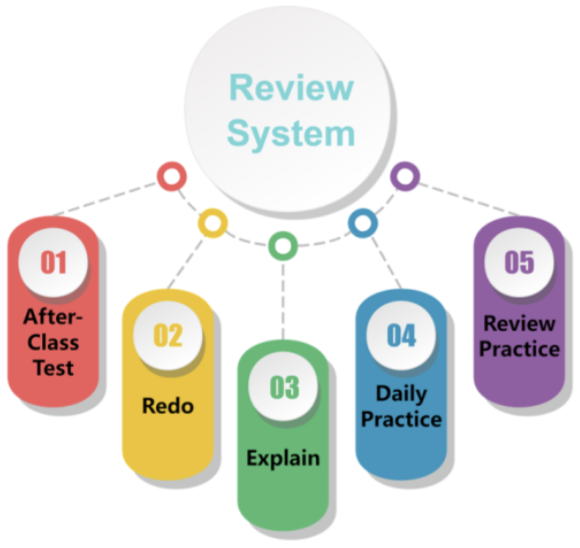
Kangaroo Study's P1 Curriculum
Below are the syllabus for our end of holiday courses, as well as the curriculum for the first semester at the beginning of next year:
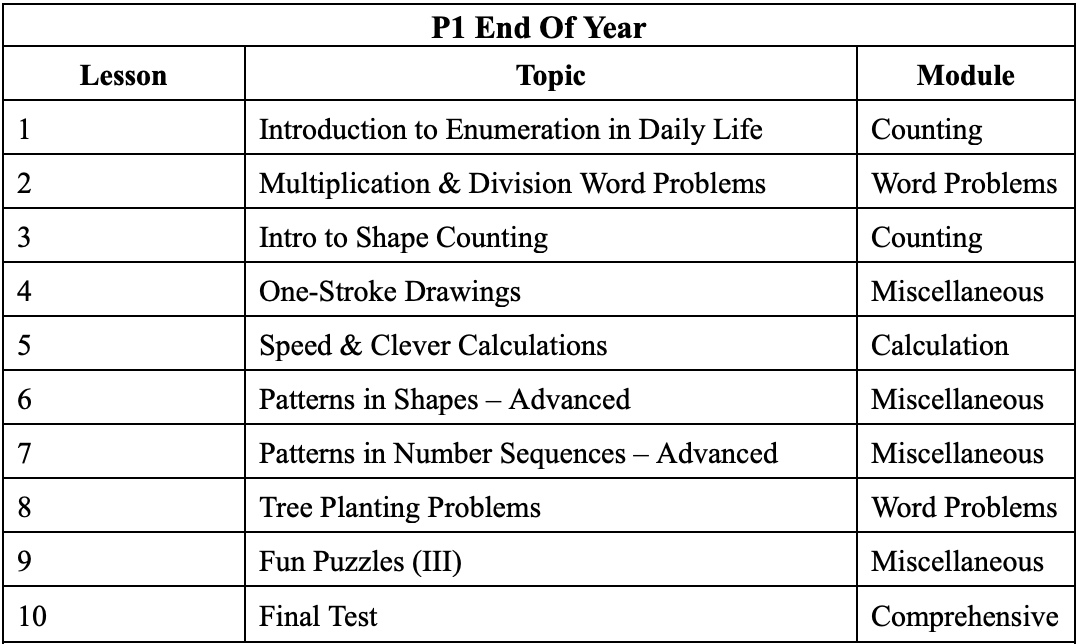

(1) Calculation – Building Number Sense
Instead of relying on repetitive drills, we teach multiplication and division concepts through real-life contexts to deepen understanding. In Semester 1, topics like speedy calculations and smart operator use strengthen number sense.
(2) Word Problems – Core Skill Building
This module bridges the gap between numbers and language, helping students interpret and solve real-world problems. Semester 1 expands into unique problem types such as tree planting and queue arrangements, fostering diagram-based problem-solving skills.
(3) Miscellaneous Problems – Thinking & Fun
From one-stroke drawings to pattern games, students enhance logic, observation, and creativity while discovering the joy of mathematics.
Course Outline
To ensure that children can make the most of their holiday time, our courses are scheduled in three separate sessions. Each session covers the same content, so students only need to enroll in one session without attending multiple times.
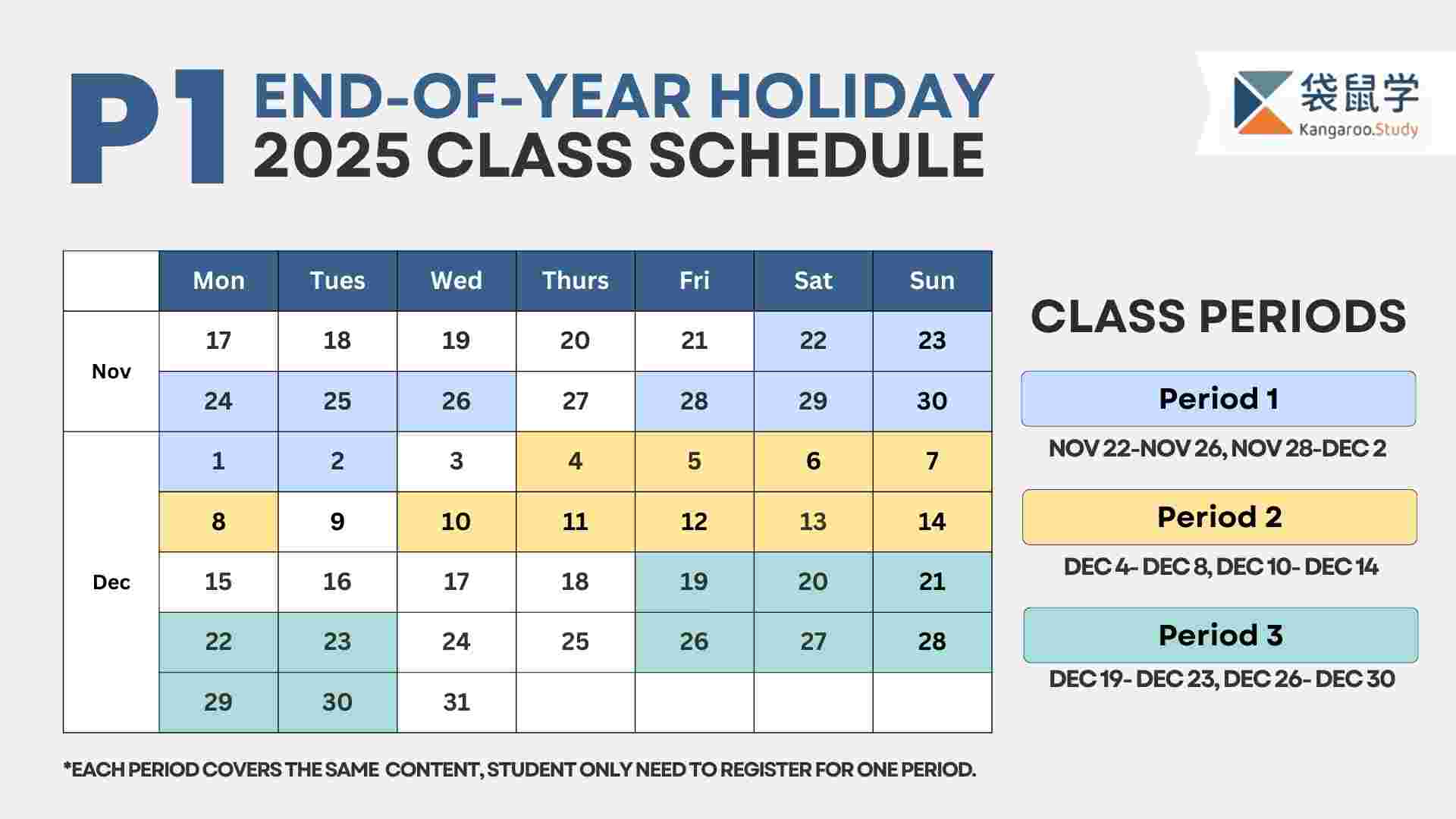

Semester 1 (P2 2026) – Starts Jan 9, once weekly

Meet Our Teacher

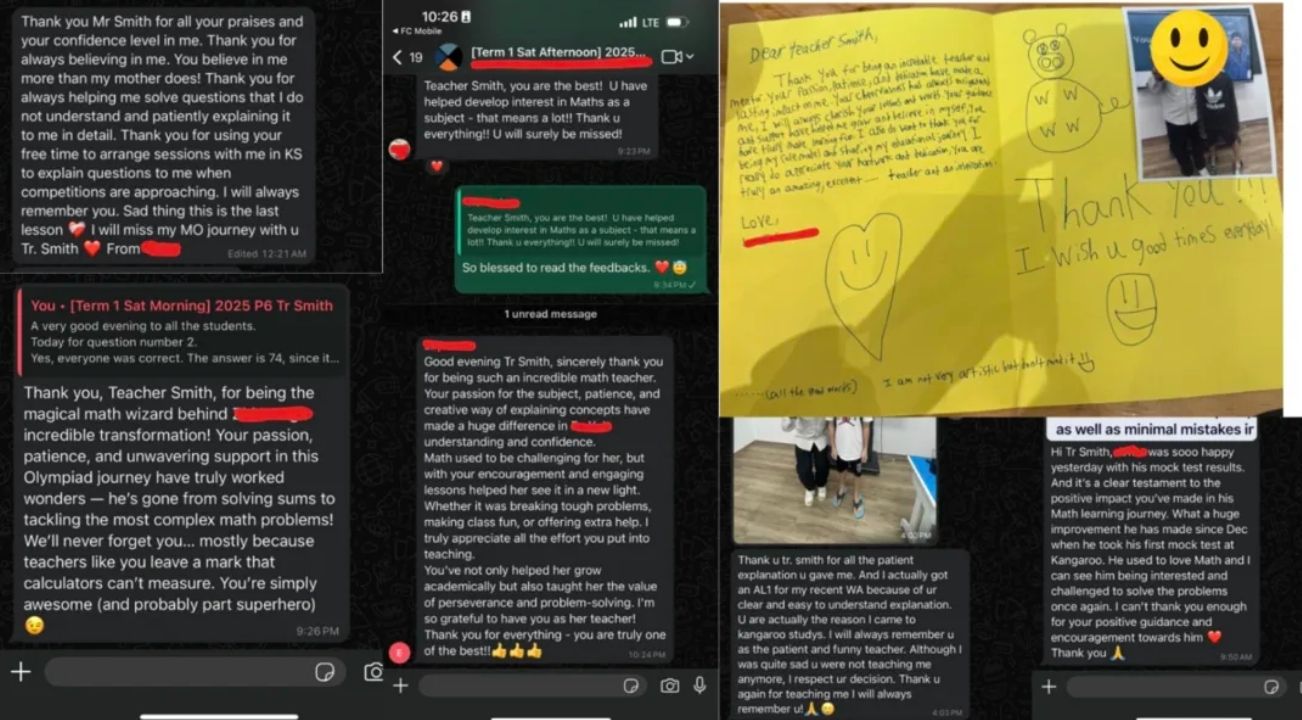
As the head of our Lower Primary teaching team and the lead instructor for P1 and P2 Olympiad courses, Mr. Smith has long guided students in preparing for key entry competitions such as GEP selection, SASMO, and SMKC, helping them build a solid mathematical foundation. Beyond his strong professional expertise, he is skilled at creating a vibrant yet well-structured classroom environment—balancing warmth with discipline, and encouraging students to express themselves confidently and think critically.


How To Enroll?
All students are required to complete a placement test before enrolling.
This allows our team to assess the child’s current level and recommend the most suitable class.
Enrolment Process
1. Book a placement test (based on your child’s needs)2. Receive assessment results and class recommendation3. Confirm time slot and teacher, complete registration and paymentContact for Placement Test / Enquiries
Please reach out via WhatsApp or WeChat to: Tr Zhang Tao

Discussion
0 Comments
Join the conversation
Share your thoughts or ask a question about this article.
0 / 200
'%3e%3cpath%20d='M7.99992%2014.6673C11.6818%2014.6673%2014.6666%2011.6825%2014.6666%208.00065C14.6666%204.31875%2011.6818%201.33398%207.99992%201.33398C4.31802%201.33398%201.33325%204.31875%201.33325%208.00065C1.33325%2011.6825%204.31802%2014.6673%207.99992%2014.6673Z'%20stroke='%2390A1B9'%20stroke-width='1.33333'%20stroke-linecap='round'%20stroke-linejoin='round'/%3e%3cpath%20d='M5.33325%209.33398C5.33325%209.33398%206.33325%2010.6673%207.99992%2010.6673C9.66659%2010.6673%2010.6666%209.33398%2010.6666%209.33398'%20stroke='%2390A1B9'%20stroke-width='1.33333'%20stroke-linecap='round'%20stroke-linejoin='round'/%3e%3cpath%20d='M6%206H6.00667'%20stroke='%2390A1B9'%20stroke-width='1.33333'%20stroke-linecap='round'%20stroke-linejoin='round'/%3e%3cpath%20d='M10%206H10.0067'%20stroke='%2390A1B9'%20stroke-width='1.33333'%20stroke-linecap='round'%20stroke-linejoin='round'/%3e%3c/g%3e%3cdefs%3e%3cclipPath%20id='clip0_2876_5854'%3e%3crect%20width='16'%20height='16'%20fill='white'/%3e%3c/clipPath%3e%3c/defs%3e%3c/svg%3e)