 Apr 13, 2026
 5 min read
From Fear to Fearless: Stop Saying “You Can Do It” — Try This Instead
Parents, do you often encounter situations like this?
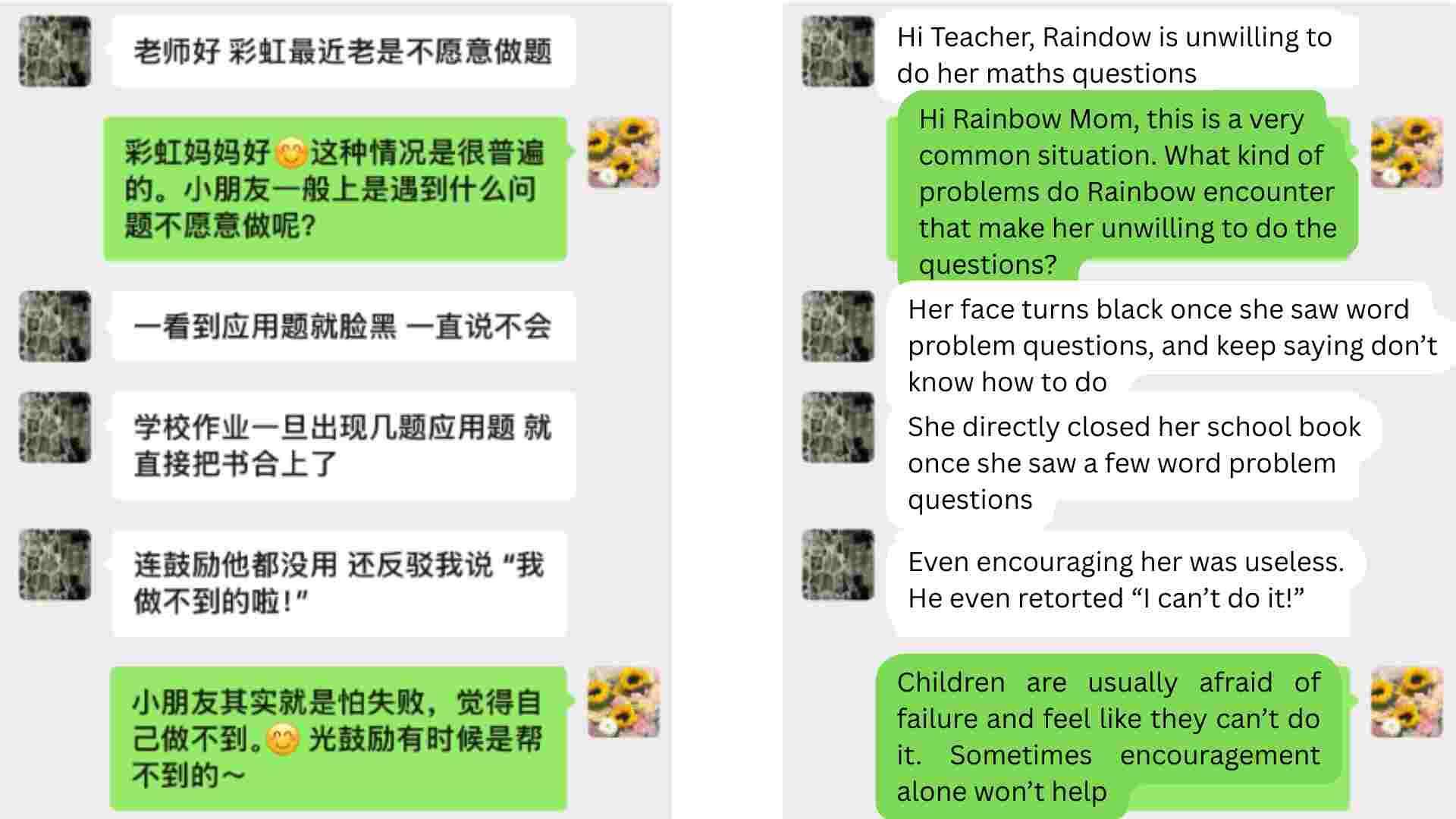 Don’t rush to get upset—this is likely not your child “being lazy,” but rather that the gap between their current ability and the challenge is too large.
They preemptively assume they will fail, which leads to a fear of difficulty. If parents only keep saying “You can do it,” children may feel misunderstood and even develop resistance.
Don’t rush to get upset—this is likely not your child “being lazy,” but rather that the gap between their current ability and the challenge is too large.
They preemptively assume they will fail, which leads to a fear of difficulty. If parents only keep saying “You can do it,” children may feel misunderstood and even develop resistance.
Why Do Children Fear Difficult Problems?
i.Fear of Failure
The root cause of avoidance is that children believe they will definitely fail, so they avoid trying to prevent being rejected.
ii.Children Underestimating Themselves
Limited experience and ability make children feel “I can’t do it,” naturally leading to avoidance.
iii.Lack of Confidence
Confidence is not something shouted out loud—it is built through repeated experiences of “I did it!”
iv.Dependency Mindset
When facing difficulties, children tend to rely on others and lack the courage to face challenges independently.
v.Parents’ “Curse of Competence”
What seems easy to parents may feel like an extremely difficult exam to children. If parents casually say, “This is simple,” children may feel ignored or misunderstood, which can lead to resistance.
Why “More Encouragement” From Parents Sometimes Backfire?
More Effective Approaches Beyond Encouragement
i.Prioritize emotions: acceptance and empathy
Children need to feel understood before they lower their defenses to try.
- ❌ Don’t say: “What’s there to be afraid of?”
- ✅ Instead say: “You feel this problem is too hard, right? I felt the same way when I was young.”
- Replace “I can’t” with “I don’t know yet” to reduce negative language and boost confidence.
- Praise effort and process, not just results, e.g., “You focused for five minutes—that’s great.”
- Divide big tasks into smaller steps that can be completed one by one. For example, 15 + 27 → first add 15 + 20, then add 7.
- Start with what they can do before tackling new challenges to build confidence.
- Once children experience “I can solve this,” their resistance will be lessens next time.
- “Watch me do it”: Demonstrate problem-solving steps out loud, e.g., solving a math problem.
- “You try, I help”: Offer clues instead of answers, e.g., “Can you check if the ones place is enough to subtract?”
- “You do, I watch”: Gradually let the child do it independently.This helps children learn how to solve problems rather than just knowing they have to solve them, fostering true independence.
- “I can’t” → “I haven’t learned yet”
- “I’m afraid” → “I can try”
Discussion
0 Comments
Join the conversation
Share your thoughts or ask a question about this article.
0 / 200
'%3e%3cpath%20d='M7.99992%2014.6673C11.6818%2014.6673%2014.6666%2011.6825%2014.6666%208.00065C14.6666%204.31875%2011.6818%201.33398%207.99992%201.33398C4.31802%201.33398%201.33325%204.31875%201.33325%208.00065C1.33325%2011.6825%204.31802%2014.6673%207.99992%2014.6673Z'%20stroke='%2390A1B9'%20stroke-width='1.33333'%20stroke-linecap='round'%20stroke-linejoin='round'/%3e%3cpath%20d='M5.33325%209.33398C5.33325%209.33398%206.33325%2010.6673%207.99992%2010.6673C9.66659%2010.6673%2010.6666%209.33398%2010.6666%209.33398'%20stroke='%2390A1B9'%20stroke-width='1.33333'%20stroke-linecap='round'%20stroke-linejoin='round'/%3e%3cpath%20d='M6%206H6.00667'%20stroke='%2390A1B9'%20stroke-width='1.33333'%20stroke-linecap='round'%20stroke-linejoin='round'/%3e%3cpath%20d='M10%206H10.0067'%20stroke='%2390A1B9'%20stroke-width='1.33333'%20stroke-linecap='round'%20stroke-linejoin='round'/%3e%3c/g%3e%3cdefs%3e%3cclipPath%20id='clip0_2876_5854'%3e%3crect%20width='16'%20height='16'%20fill='white'/%3e%3c/clipPath%3e%3c/defs%3e%3c/svg%3e)